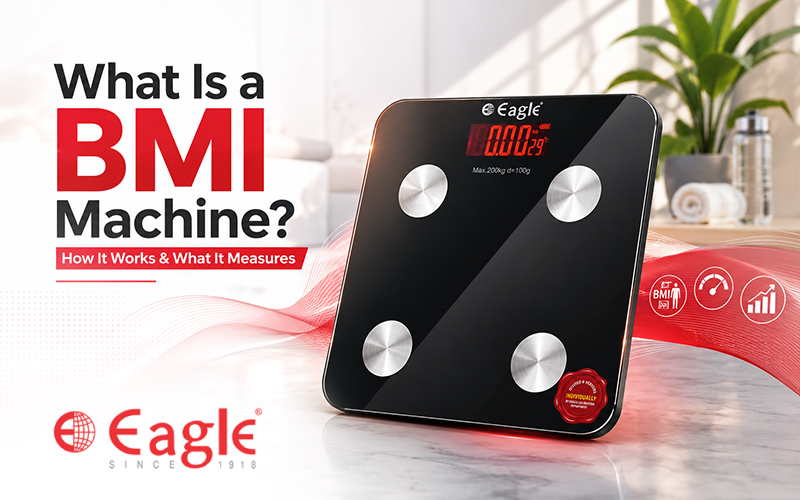
BMI machines or body mass index scales are a revolutionary health and fitness tracking technology. This innovative tool allows you to better understand your physical health and assess the progress of your fitness regimen.
A BMI machine helps you figure out whether your weight is in the safe range in relation to your height. These machines are common in hospitals, gyms, fitness centers, or wellness clinics where you need to get a clear picture of your current fitness level to make more informed health choices.
This blog explores BMI machines in detail. The information given in this article will help you understand the working of this tool in a much better way. So, let’s get right into it.
- What Does BMI Mean?
- What is BMI used for?
- What Is a BMI Machine?
- How Does a BMI Machine Work?
- What Does a BMI Machine Measure?
What Does BMI Mean?
Before we look into BMI machines or weighing scales, let’s first discuss what exactly BMI is.
BMI, or body mass index, refers to a screening measurement that you can use to figure out whether your body weight falls within a healthy range based on your height. The range for a healthy BMI is between 18.5 and 24.9.
Recent data from the World Health Organization shows that about 2.5 billion adults worldwide are classified as overweight. And not just that, around 43% of adults globally have a BMI ≥ 25 (overweight range), and about 16% of adults worldwide have a BMI ≥ 30 (obesity range).
The formula for measuring BMI is as follows:
BMI = Weight (kg)/ Height (m)2
Let’s say, for example, that you weigh about 80 kg and your height is 1.8 meters. After putting these numbers in the formula, you can easily determine that your BMI is about 24.7, which falls in the normal range.
Higher BMI numbers usually indicate that a person has more body fat and belongs to either the overweight or obese category. This increases the risk of heart disease, diabetes, and stroke.
On the other hand, a very low BMI may indicate malnutrition or other underlying health issues. This way, this metric can help healthcare providers assess both the health status and disease risks in patients.
What is BMI used for?
BMI is a valuable tool in healthcare as it helps professionals classify weight categories. It also proves useful as a screening tool to estimate the risks of certain serious health conditions.
1. Determining Weight Ranges
Here is how you can use BMI to classify different weight ranges.
- People with a BMI less than 18.5 are underweight.
- People with a BMI between 25.0 and 29.9 are overweight.
- You have class 1 obesity if your BMI is in the range 30-34.9.
- You have class 2 obesity if your BMI is in the range 35-39.9.
- You have class 3 obesity if your BMI is above 40.
2. Screening for Health Risks with BMI
- Low BMI
If your BMI is less than 18.5, you are underweight. This may indicate conditions such as malnutrition, anemia, or other health concerns. Low BMI may be associated with a higher risk of osteoporosis and fertility-related issues.
- High BMI
If your BMI is 25 or higher, you are considered overweight or obese, depending on the range. Recent research shows high BMI increases risks of type 2 diabetes, cardiovascular disease, hypertension, chronic kidney disease, liver disease, and cognitive decline.
3. Progress Monitoring
BMI also helps fitness professionals monitor the progress of their weight-loss programs, muscle-building routines, athletic training, and rehabilitation programs. This allows them to modify their strategy to get maximum results.
What Is a BMI Machine?
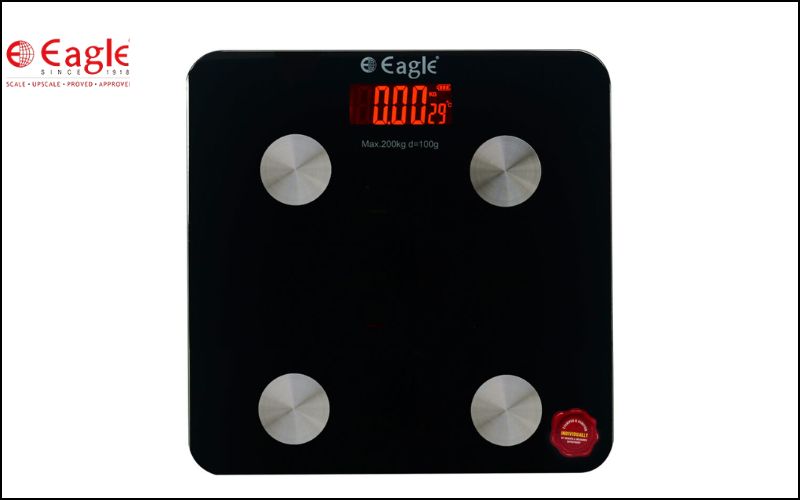
BMI machines or healthcare scales are health assessment devices that can automatically calculate your body mass index based on your weight and height. BMI machines utilize digital sensors, body analysis technologies, and software to estimate BMI and other health metrics with a reasonable level of accuracy.
Advanced BMI machines can generate detailed body composition reports that help doctors and fitness professionals assess your current health status.
Here are some areas where these machines find uses:
- Hospitals
- Medical clinics
- Sports facilities
- Fitness clubs
- Schools
- Pharmacies
- Homes
How Does a BMI Machine Work?
Many advanced BMI personal scales use Bioelectrical Impedance Analysis (BIA) to estimate body composition. They combine this information with user data such as height (and sometimes age and gender for body composition analysis) to calculate BMI.
When a user stands on the scale, it sends a weak electrical signal through the body. Your body’s fat, tissues, and water content conduct this current differently. Your muscles have more water, which allows for easy passage of current. On the other hand, the fat content in your body resists the flow of the signal.
The machine uses this data to determine the following parameters:
- Body fat percentage
- Muscle mass
- Water percentage
- Bone mass
What Does a BMI Machine Measure?
The following are some key health metrics that you can measure with the help of a BMI machine:
- Body Mass Index (BMI)
As the name suggests, a BMI machine primarily helps you determine your body mass index. This helps you categorize yourself in normal, overweight, and obese categories.
- Body Weight
A smart weighing scale that measures BMI also gives you an accurate measure of your weight. These machines use load cells and sensors to detect how much you actually weigh.
- Body Fat Percentage
You can also measure how much of your body is made up of fat tissue with a BMI scale. It is important to note that two individuals can have the same BMI but very different body fat levels.
For example, muscular athletes may have a high BMI but a low body fat value. On the other hand, sedentary individuals can have a normal BMI but a high body fat percentage.
- Visceral Fat
This is the fat that is around your internal organs in the abdominal area. Advanced BMI machines can help you assess visceral fat levels, which can uncover the risks of heart disease, type 2 diabetes, and metabolic syndrome.
- Water Percentage
You can also estimate your body’s hydration status with advanced BMI machines or smart weighing scales. Hydration levels can affect physical performance and overall health.
- Bone Mass
Some advanced BMI scales provide an estimated bone mass value, though they cannot directly measure bone mineral density like medical imaging devices.
- Basal Metabolic Rate (BMR)
BMI machines can estimate your BMR or basal metabolic rate using predictive equations and body composition data, which shows how many calories your body burns while you are at rest. This helps you with weight loss planning as well as general nutritional choices.
Conclusion
BMI machines are valuable health monitoring tools. They help both regular people and healthcare professionals with fitness tracking as well as preventive healthcare.
You can combine your BMI calculations with other metrics like body fat percentage, metabolic rate, or muscle mass that you get from a BMI machine to get a clear picture of your current health.
This makes BMI machines a useful tool for people who want to monitor weight and body composition changes at home. So, invest in this convenient and informative fitness tool to better track your fitness progress over time.
Visit us at Eagle Scales today to order our premium quality BMI machines and explore our wide range of personal healthcare scales at very affordable prices.
FAQs
Is my BMI machine accurate?
These machines are generally accurate for measuring body weight and calculating BMI, though body composition estimates may vary. Just make sure to use the machine under similar conditions after consistent intervals to get rid of doubts.
What is considered to be a safe BMI range?
18.5 – 24.9 is a safe BMI range for most young and middle-aged adults.
How often should you use a BMI machine?
You can use it once or twice a week under similar conditions, such as time, diet, and physical activity. Daily or random measurements fluctuate as factors like meals, hydration, or exercise come into play.
Are BMI and body fat percentage the same?
No. BMI uses weight and height to calculate your body mass, while body fat gives you an idea about how much of your body consists of fat tissue.
Does dehydration affect the results of a BMI machine?
Dehydration can affect body composition measurements such as body fat percentage, but it does not affect BMI calculations because BMI is based only on height and weight.